Educational resource for peptides
Quality / COA / Testing
![[background image] image of a workplace setting (for an ai healthcare company)](https://cdn.prod.website-files.com/6a43132b3586f22948307b9d/6a55ccb81a5105268fff79f0_AE%20bathroom%20counter.png)
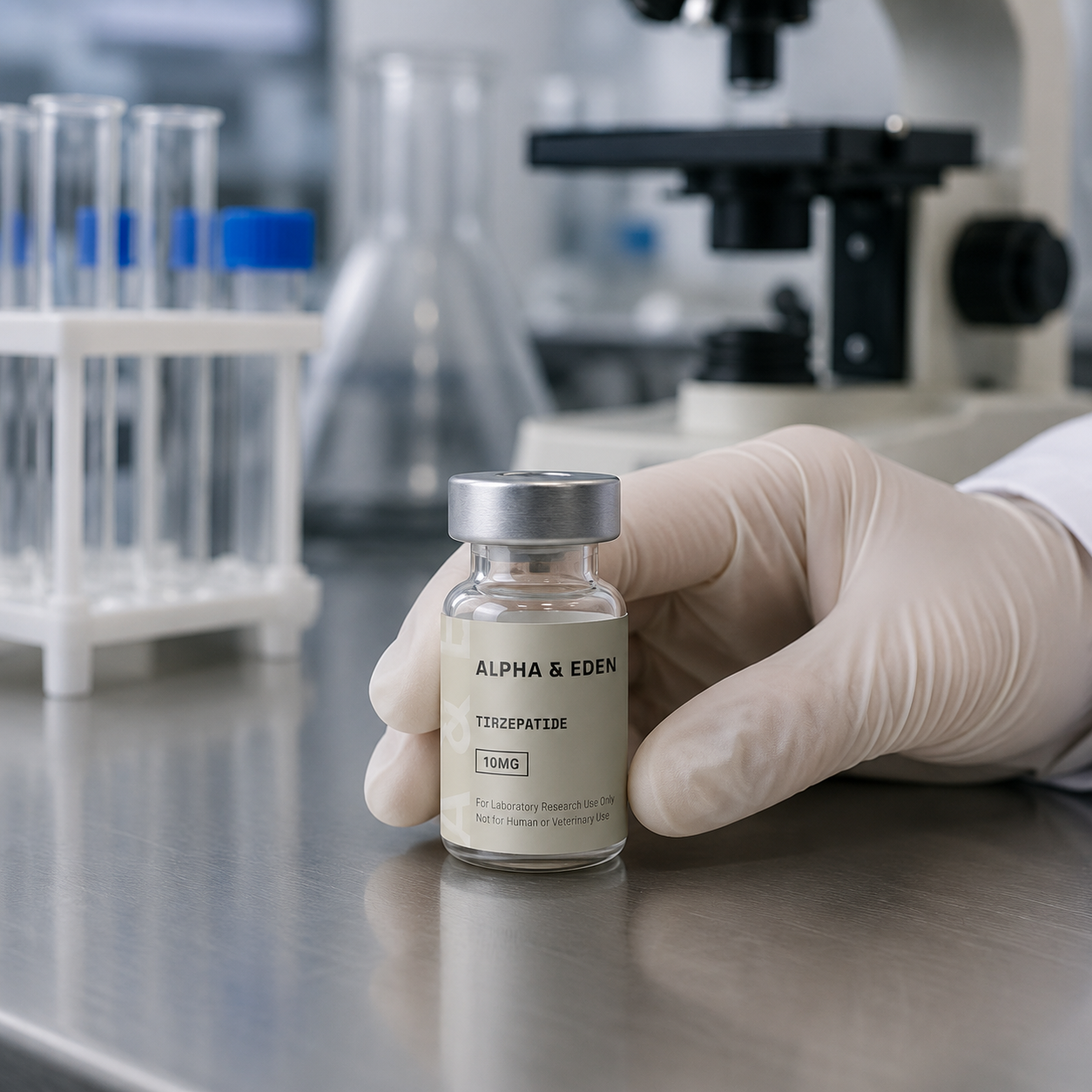
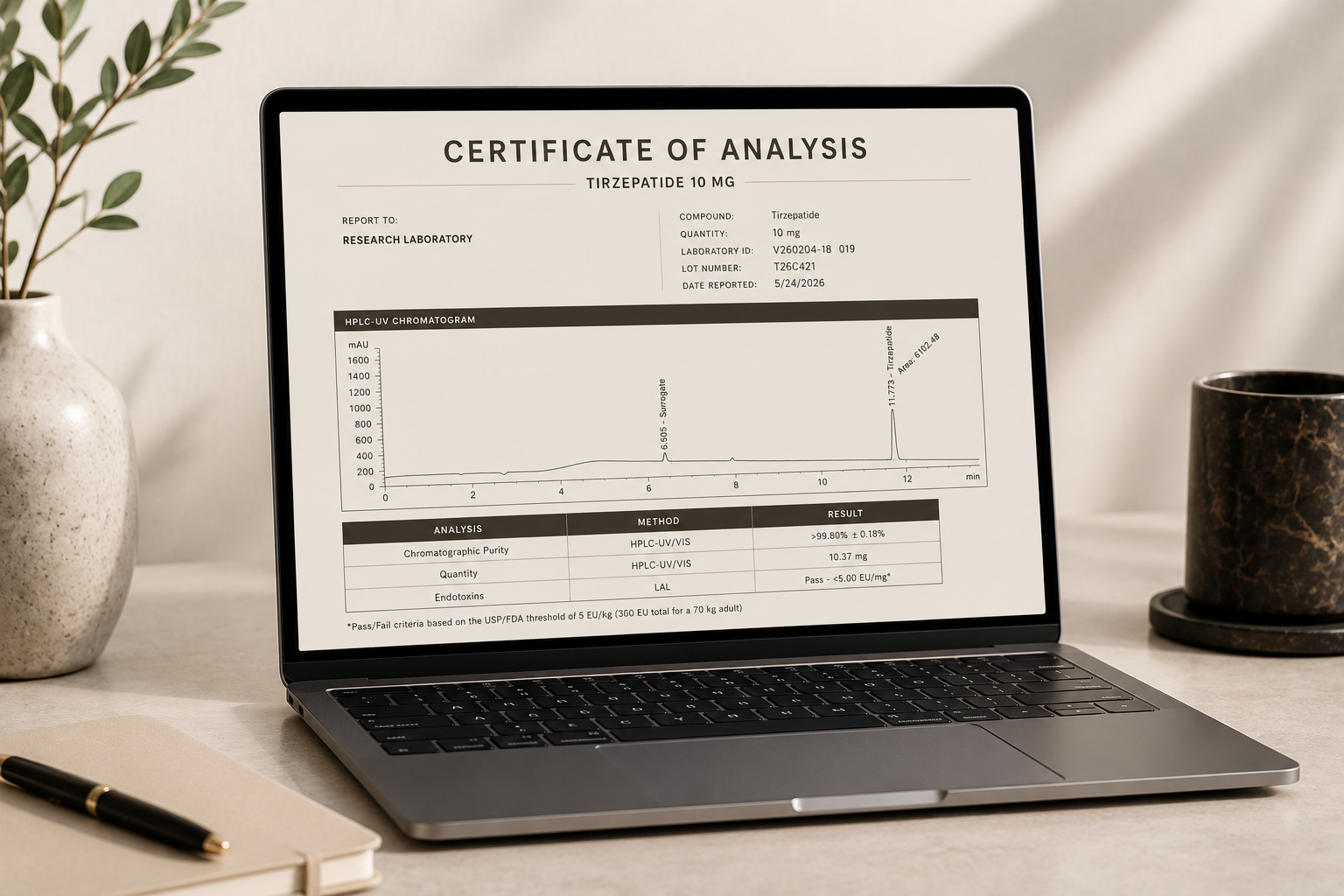
A Certificate of Analysis, or COA, is a document that provides testing information for a specific lot or batch. COAs may
include identity, purity, and other quality-related data depending on the testing performed.
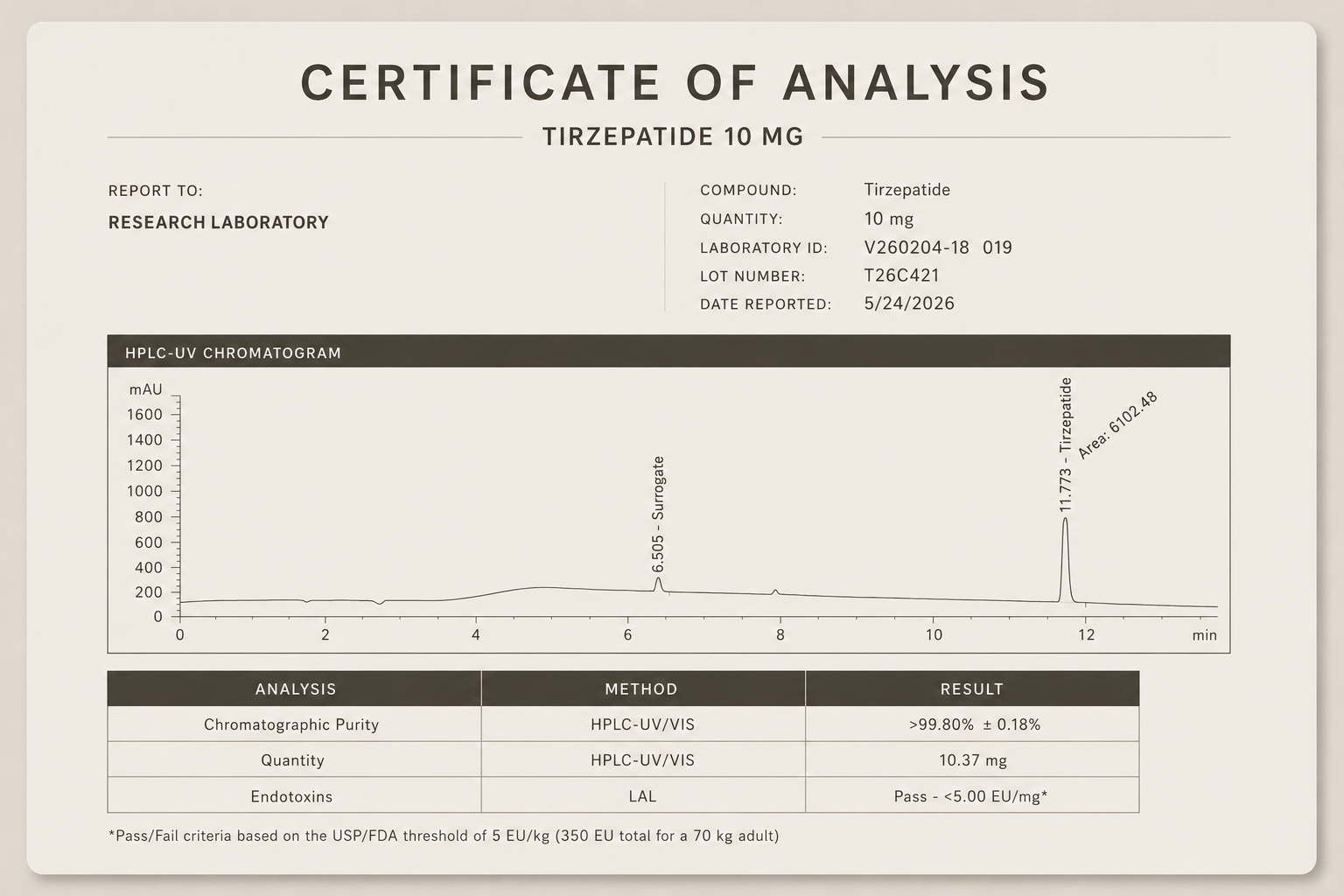
A Certificate of Analysis is a document that provides testing information for a specific lot or batch.
Third-party testing means that an independent laboratory, not the manufacturer, verifies the identity, purity, and quality of a product. This additional layer of verification helps ensure that every batch meets established specifications before it reaches researchers.
Purity refers to the percentage of a sample that is the intended peptide, rather than impurities such as incomplete peptide fragments, byproducts from synthesis, or degradation products.
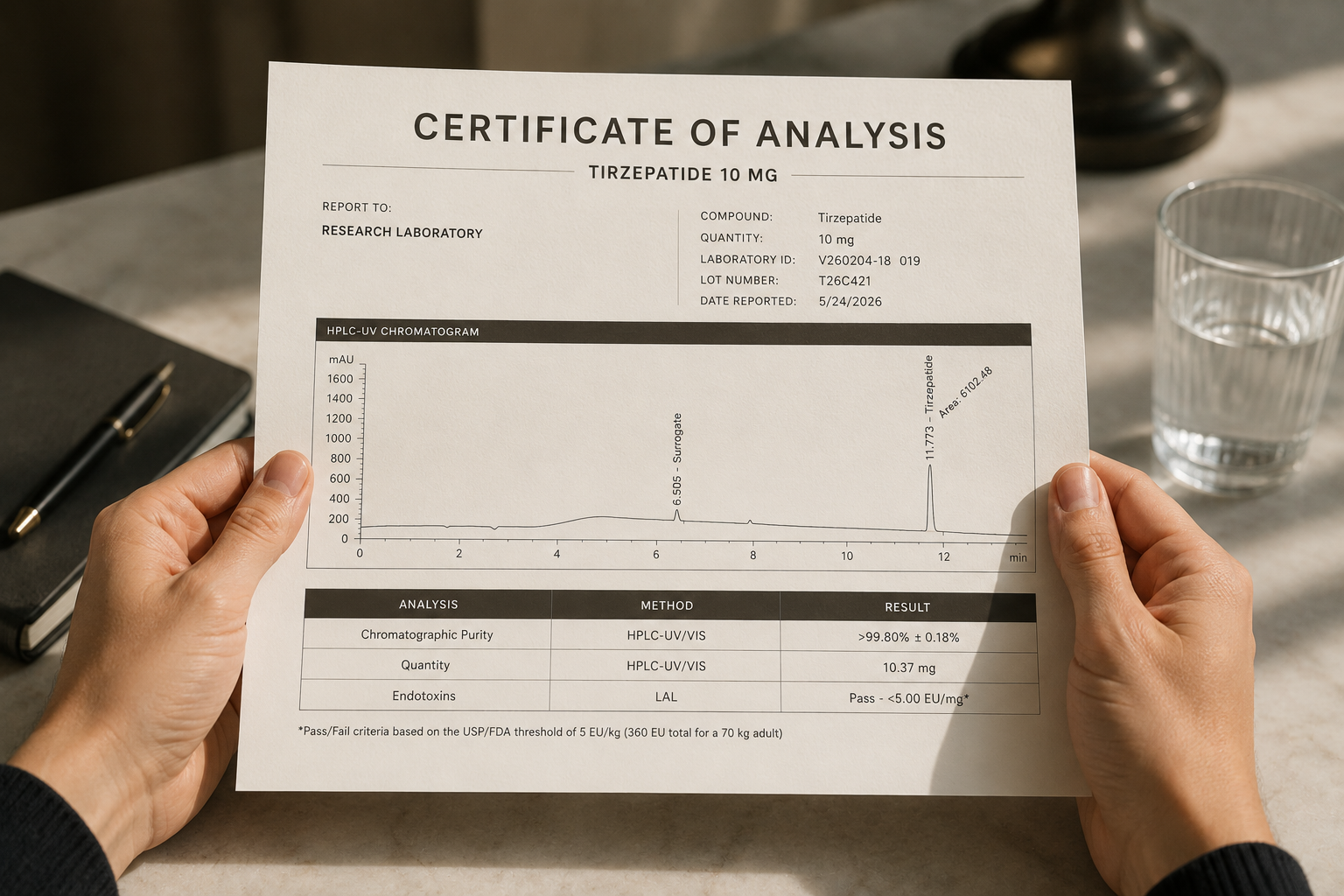
A reputable supplier should provide clear documentation, maintain consistent quality standards, and make batch-specific testing results readily available. Transparency is one of the strongest indicators of a commitment to quality.
• No COA
• COA does not match the lot number
• No batch number
• No company transparency
• Unrealistic claims
• Damaged packaging
• No storage guidance
• Product looks cloudy or discolored after reconstitution
• Visible floating particles
• Unknown source or manufacturer